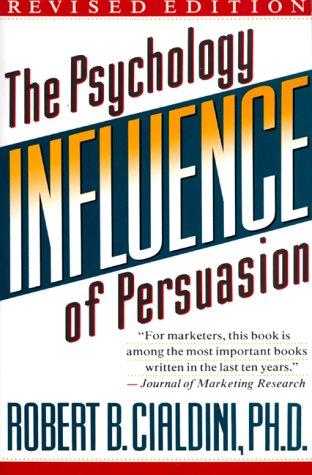
Influence
Robert Cialdini
First published 1984William Morrow first edition of Influence: The Psychology of Persuasion, 1984
What it is.
The original case for social proof as one of the strongest levers on behavior.
Cialdini went and worked the jobs. Car sales, fundraising, direct mail, because he wanted to know what people who persuade for a living actually do rather than what the lab said they should. What came back was six levers that turn up everywhere once you know them. Reciprocity, commitment and consistency, social proof, liking, authority, and scarcity. It is sold as a way to persuade people, and it is more useful read the other way.
Working summary · based on the book itself
The strongest objection
It is the oldest book here and some of the studies behind it have aged less well than the framework has. Read the six levers as a map rather than as settled effect sizes.
Working summary · based on the book itself
Why it is here.
A social norm is your read on what people like you actually do, and you quietly drift toward it. Show someone that their neighbors use less, and they use less too, without anyone telling them to.
Social proof is the lever behind the sustainability page, and this is where the case for it was first made properly. The claim is stronger than it sounds. What the people around you are doing is often the main input into your decision, and it does not need you to notice it.
Working summary · based on Toward's records
Where it sits.
Goals it serves.
Read it beside Predictably Irrational, which covers overlapping ground with newer experiments and much less field work. If you want only the social proof chapter in practice, that is what the sustainability tool here is.
Working summary · based on Toward's records