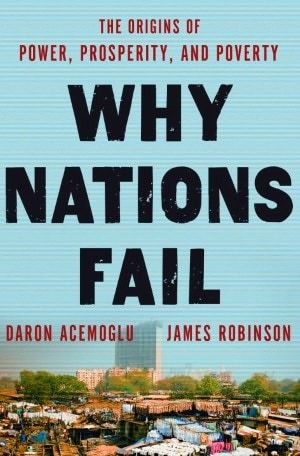
Why Nations Fail
Daron Acemoglu & James A. Robinson
First published 2012Crown Business first edition, 20 March 2012, ISBN 9780307719218
What it is.
The argument that a country's institutions, meaning who holds power and who is allowed to benefit from what gets built, explain wealth and poverty better than geography or culture do.
The claim is that institutions explain wealth and poverty better than geography or culture, and by institutions they mean who holds power and who is allowed to keep what gets built. The distinction carrying the book is between inclusive institutions, which spread both, and extractive ones, which concentrate them and have to suppress the innovation that would threaten them. It opens on a town split by a border, same ground and same people, living very differently.
Working summary · based on the book itself
The strongest objection
Geography has not gone away. Critics argue the case runs backwards, that wealth produces good institutions rather than the other way round, and that the split-town examples are chosen because they work.
Working summary · based on the book itself
Why it is here.
It arrived as the answer to a question the shelf raised. Naked Economics leaves geography against institutions open, and this is the long version of the institutions side. That is why it is here rather than filed as general interest history.
Working summary · based on Toward's records
Where it sits.
No goal on this site is built on this one.
The book to read against it is Guns, Germs and Steel, which puts the weight back on geography. Beside it here, Poor Economics and Good Economics for Hard Times work the household end of the same problem.
Working summary · based on Toward's records