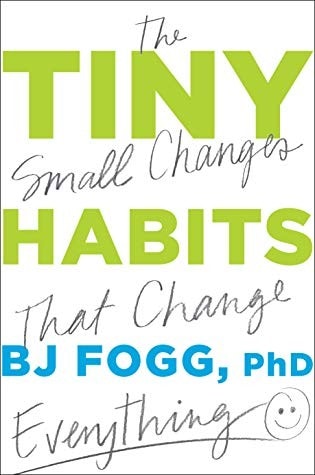
Tiny Habits
BJ Fogg
First published 2019Harvest/Houghton Mifflin Harcourt US first edition, 31 December 2019
What it is.
Fogg's B=MAP model: shrink the behavior until it's too small to skip, and anchor it to a routine you already have.
Fogg's model is that a behavior happens when three things arrive at once. Motivation, ability, and a prompt. Since motivation is the one you cannot rely on, attack ability instead. Shrink the behavior until it takes almost nothing, anchor it to something you already do without thinking, and celebrate it on the spot so the good feeling attaches to the action. One flossed tooth counts. That sounds like a joke and it is the instruction.
Working summary · based on the book itself
The strongest objection
The model is Fogg's own, built from his lab and his coaching rather than from independent replication. A useful frame, tested less than the findings in the behavioral books on this shelf.
Working summary · based on the book itself
Why it is here.
A behavior is triggered by a cue in your environment or routine, not summoned by willpower. Decide in advance exactly when and where you'll act, and the moment itself does the remembering for you.
The cues principle rests on the prompt half of that model, and this is where it is stated most plainly. A cue is not a reminder you set. It is something already in your day that reliably happens, which is why the instruction is to anchor rather than to schedule.
Working summary · based on Toward's records
Where it sits.
Goals it serves.
Start here if anything else on this shelf feels like too much. It asks you to change one thing about tomorrow morning and then leaves you alone. Atomic Habits is the natural next step if it works.
Working summary · based on Toward's records