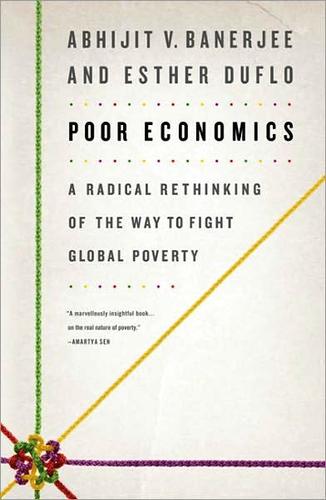
Poor Economics
Abhijit V. Banerjee & Esther Duflo
First published 2011PublicAffairs first edition, 26 April 2011, ISBN 9781586487980
What it is.
What the lives of the very poor actually look like up close, built out of field experiments rather than theory. It is the book the development pieces in this wing come out of.
Banerjee and Duflo stop arguing about poverty in general and start testing specific questions with randomized trials. Does a bed net work better given away or sold. Why does a household short of calories buy a television. The answers keep landing in the same place. The choices look strange from outside and make sense once you see the constraints, missing information, absent insurance, and the number of decisions a poor household makes that a rich one has automated.
Working summary · based on the book itself
The strongest objection
Trials answer small questions well. Critics argue the thing that actually moves people out of poverty is sustained growth, and that no amount of well-tested micro-policy substitutes for it.
Working summary · based on the book itself
Why it is here.
The development pieces in this wing come out of this book. The less obvious reason is method. It is the clearest demonstration available that a field can test its own answers and then change them, which is the standard this site tries to hold its own claims to.
Working summary · based on Toward's records
Where it sits.
No goal on this site is built on this one.
Read it before Good Economics for Hard Times, by the same two authors. This is the fieldwork, that is the same habits of mind pointed at rich country arguments. Why Nations Fail sits beside both and looks at the state rather than the household.
Working summary · based on Toward's records