Suppose you want to hand poor families cash. No forms, no job-search requirement, no voucher that only buys milk. Just money. The first thing someone will say back to you is that the money will make them lazy — that people work because they have to, and that taking away the have-to takes away the work.
It is a reasonable sounding fear and is backed up by traditional economic theory. Because of this, many welfare systems are built around it. It is also one of the most carefully tested claims in economics, because the United States went and ran the experiment. Between 1970 and the early 1980s, thousands of families in Seattle and then Denver were randomly assigned a guaranteed income and then followed for years. If people stop working when the money is guaranteed, this is where it would have shown up.
It showed up. Just not at anything like the size of the fear.
9%
How much primary earners cut their working hours in the experiment's second year — a few hours off a full week, not a walk-off.
That is what the experiment found, across roughly 4,800 families, treated and control, over a decade. Hours came down at the edges of the week. Nobody quit in droves. The thing the whole system was designed to prevent turned out to be a trim.
That was the 1970s. Somebody has since run it again. A recent trial handed a thousand people $1,000 a month for three years, compared them against twice as many people given a token amount instead, and went looking for exactly the same thing. It found it, and it found it at close to the same size: participation in the labor market fell 4.1 percentage points, hours fell by one to two a week, and the authors put the whole effect at 5 to 6% of what the control group was working.
Two generations apart, two research teams, two different economies, and the answer lands in the same narrow band. That is the thing worth sitting with. The effect replicated. The catastrophe did not. And the objection has never once been stated at the size the evidence keeps finding. Nobody says participation will fall four points. They say people will stop working. It is an argument about direction being used to justify machinery built for magnitude.
There is a second version of the fear, and it is about spending rather than working: give people cash and they will drink it away. That one has been tested even more widely. A review pulled together nineteen studies that measured what happened to spending on alcohol and tobacco, plus eleven more that asked recipients directly what they had bought. Almost without exception it found no increase, and often a fall. Two of the thirty found a small rise, and neither was a randomised study. The authors' word for the worry was unfounded.
And when researchers followed poor households in western Kenya who were handed unconditional transfers with no strings at all, the money went where money goes when you trust someone with it: more food in the house, more assets, less hunger, and measurably less psychological distress.
The wider picture from those settings runs against the fear rather than merely surviving it. When researchers went back to seven randomized trials of government cash transfer programs across six countries and re-analysed all of the data together, they found no systematic evidence that the programs discouraged work at all. The Kenya study ran the same test on its own recipients and found no negative effect on labor supply either, and said so plainly.
Why this is worth carrying
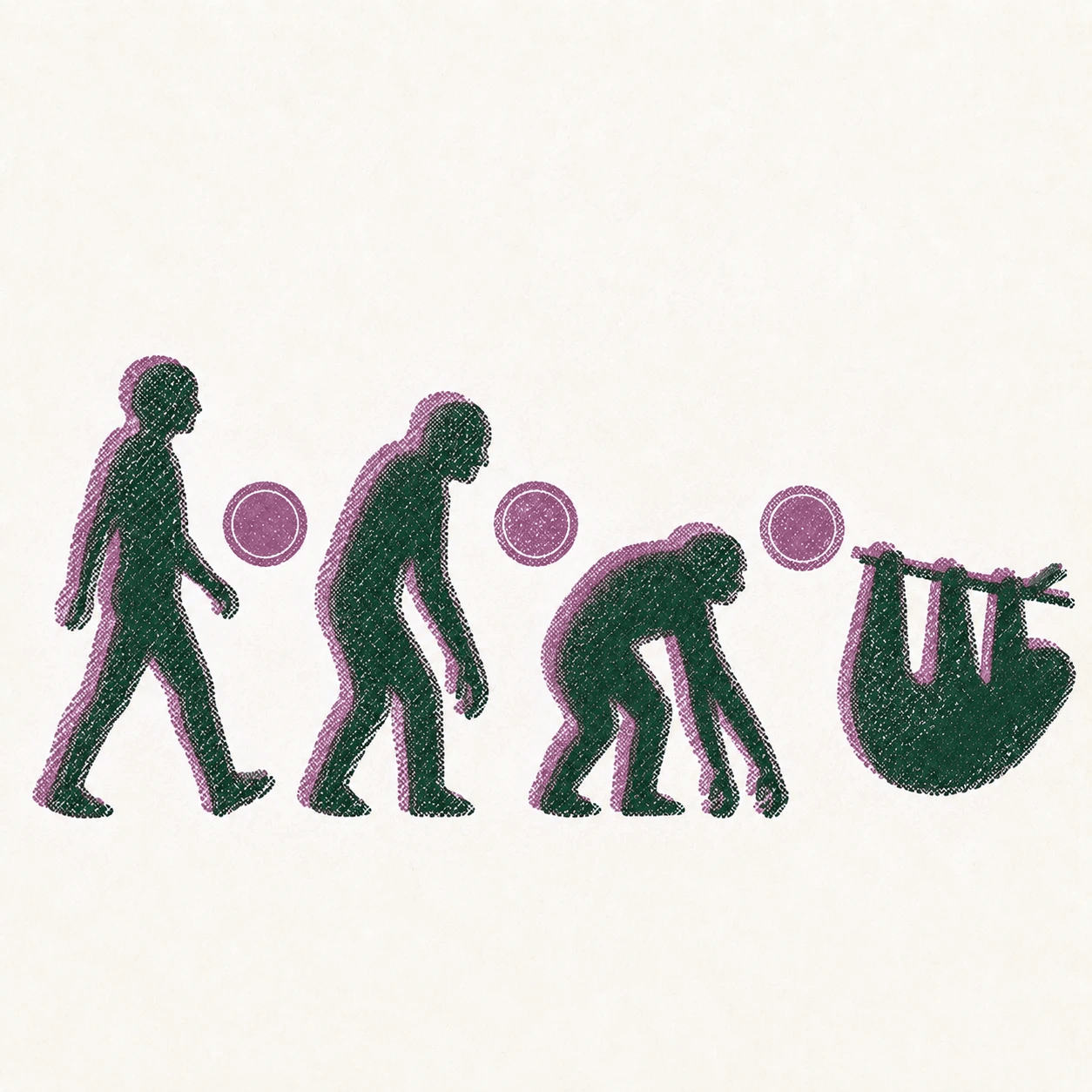
The sloth was never really a finding. It was a belief — and welfare systems got built around a sloth-shaped suspect nobody had ever actually caught.
So look at what the belief built. The forms, the eligibility interviews, the work requirements, the drug tests, the reporting: most of that machinery exists to screen out a person the evidence keeps failing to find in large numbers. Whatever else it is doing, it is not catching him.
The interesting question was never whether the fear is true. It is why a fear this testable went so long without being tested, and why the answer changed so little once it was.
Where you will see it this week
The shape to notice is unearned help gets wasted. Once you have the shape you start seeing it everywhere, usually stated as though it were obvious: free things are not valued, an open budget will be blown, and better to teach a man to fish than to ever just hand him one.
It might be true sometimes. The point is that it is nearly always assumed rather than checked — and that on the occasions somebody has bothered to check, it has mostly not held. That is a useful thing to carry into an argument, and a slightly uncomfortable thing to carry into your own opinions.
Also in Development Economics.
Seattle–Denver Income Maintenance Experiment (final report, 1983) · Evans & Popova (2014/2017) · Haushofer & Shapiro (2016) · Vivalt, Rhodes, Bartik, Broockman, Krause & Miller (2024, revised January 2026) · Banerjee, Hanna, Kreindler & Olken (2017)